_ed.png)
How to Build an Effective Control Environment with Automated GRC Tools: Avoiding Implementation Failures

More businesses are using automated GRC tools to manage compliance and prepare for audits. These tools can be helpful. They make it easier to organize tasks, track controls, and keep everything in one place.
However, implementing a tool alone does not establish a strong control environment.
Organizations encounter challenges when they rely too much on the tool itself. While the platform may appear complete, control gaps often emerge during the audit process. Ineffective implementation may increase the risk of a qualified audit opinion.
To mitigate this risk, organizations should focus on designing and operating an effective control environment, rather than relying solely on the capabilities of the tool.
Start with Your Controls, Not Just the Tool
Organizations often begin implementation by following predefined workflows within a GRC platform, including templates, pre-built controls, and guidance from implementation coordinators. While these resources provide a starting point, they may not fully align with the organization’s specific operations.
Effective controls should reflect how the business actually operates. When controls do not align with day-to-day processes, teams may struggle to execute them consistently - or may not perform them at all.
In practice, organizations sometimes depend entirely on an implementation coordinator to configure the environment. Although the documentation may appear complete, auditors often identify that controls were not properly designed or understood by control owners. This disconnect creates a gap between documented controls and actual execution.
Organizations should take time to clearly define:
The risks being managed
Control ownership and accountability
Control frequency and execution requirements
Once these elements are well understood, the GRC tool becomes a more effective enabler of compliance rather than the primary driver.
When uncertainty exists regarding control design, obtaining an independent review early in the process can help identify and address issues before they escalate. If you are unsure whether your controls are set up the right way, it may help to schedule a quick consultation. A second look early on can prevent bigger issues later.
Make Sure Your Evidence Supports Your Controls
After defining controls, organizations must ensure they collect and maintain appropriate evidence.
This is a common area where implementations fall short. While teams may complete tasks within the system, they do not always maintain sufficient documentation to demonstrate that controls operate effectively.
Auditors evaluate evidence that confirms control execution over time, including approvals, system logs, reports, and supporting records. Without clear guidance, teams may not understand what evidence to retain or how to store it consistently. As a result, organizations may believe they are audit-ready, only to discover gaps during testing.
In our experience, organizations often implement tools successfully but lack sufficient supporting evidence to satisfy audit requirements.
To address this, organizations should clearly define:
The specific evidence required for each control
The location where evidence should be stored
The frequency of evidence review and validation
Aligning controls with appropriate evidence strengthens the overall control environment and improves audit readiness.

Do Not Rely on the Tool Alone
Automated GRC tools enhance efficiency but do not replace the need for control ownership and operational understanding.
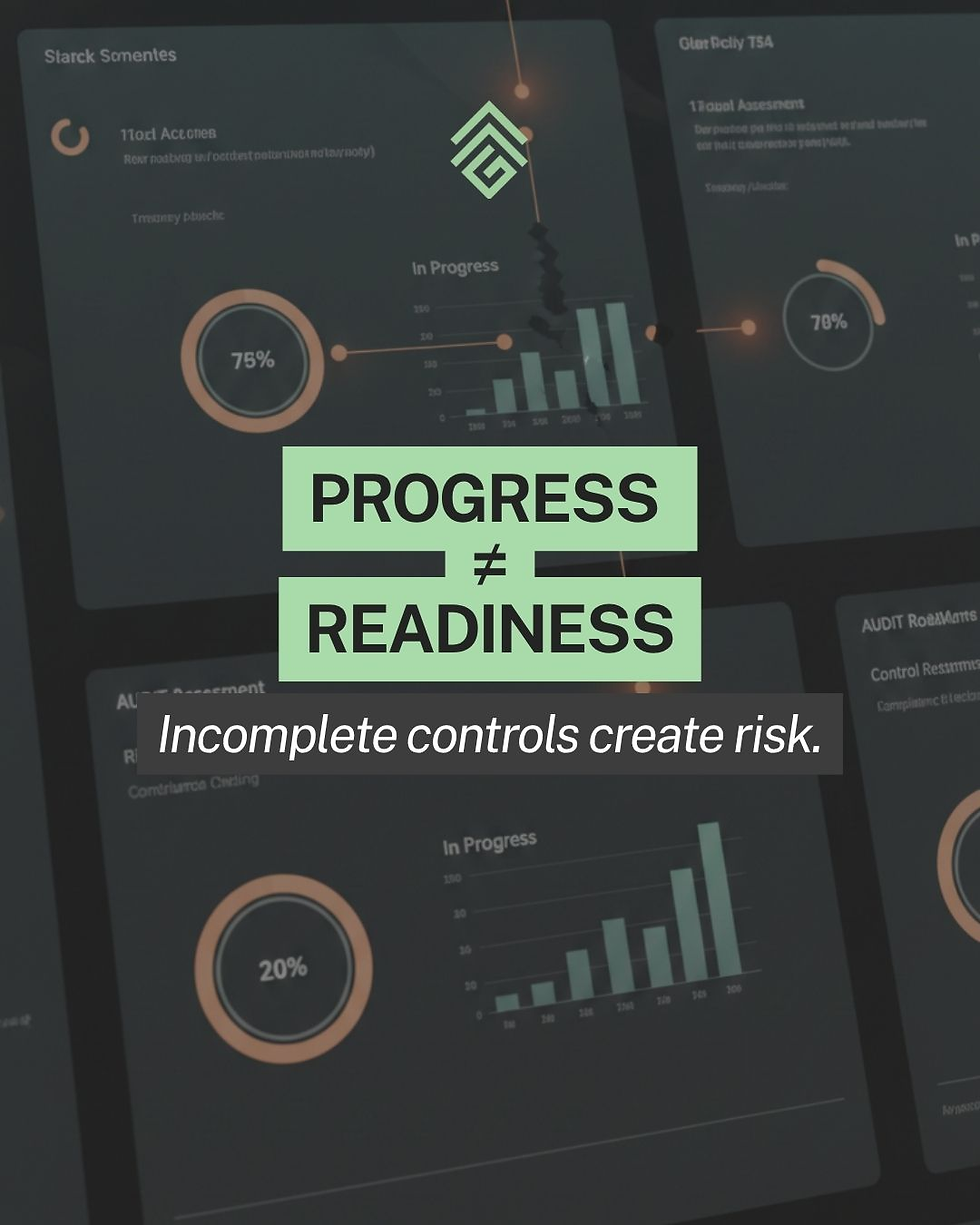
A common misconception is that completing tool implementation equates to audit readiness. In reality, the tool represents only one component of a broader control framework.
Organizations must ensure that:
Control owners understand their responsibilities
Controls operate consistently and as designed
Management performs appropriate oversight and review
Independent reviews of the control environment can help identify design or execution issues before they impact audit outcomes. A disciplined and methodical implementation approach reduces the likelihood of rework, delays, and operational disruption.
Organizations currently using - or planning to implement - a GRC tool should consider obtaining an objective assessment to validate their setup and readiness.
Keep Your Control Environment Simple and Real
A strong control environment does not depend on having the most advanced tool. Instead, it relies on:
Clearly defined and relevant controls
Consistent execution of processes
Reliable and well-maintained evidence
Organizations should design their control environment to reflect actual business operations, ensuring it remains practical and sustainable over time. By focusing on effective control design, aligning evidence with control activities, and periodically reviewing the overall environment, organizations can significantly improve their audit readiness.
For organizations seeking support with control design, implementation review, or audit preparation, Audit Advantage Group provides practical, experience-driven guidance. Engaging a trusted advisor can help ensure your control environment remains aligned, effective, and ready for audit scrutiny.


